

VOC Catalyst Testing
Our catalyst testing lab serves dozens of US customers operating regenerative and recuperative catalytic oxidizers.
WHY CATALYST TESTING MATTERS
Catalyst testing is an essential tool for selecting the right catalyst for your new VOC emission control system as well as understanding and monitoring catalyst performance in operating oxidizers. Matros Technologies offers comprehensive catalyst testing services to help you make informed decisions. Our testing protocols are designed to simulate real-world operating conditions, providing accurate performance data that translates directly to your application — whether you operate a regenerative catalytic oxidizer (RCO), a recuperative oxidizer, or another VOC abatement system.
OUR CORE TESTING PROGRAM SERVICES
Activity Testing
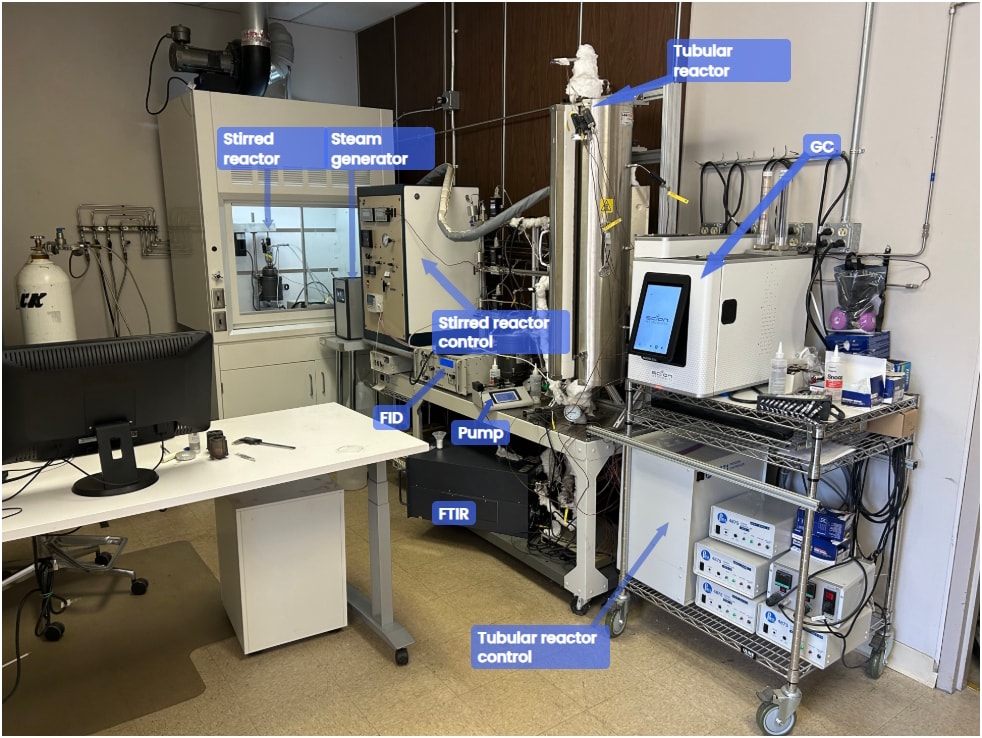
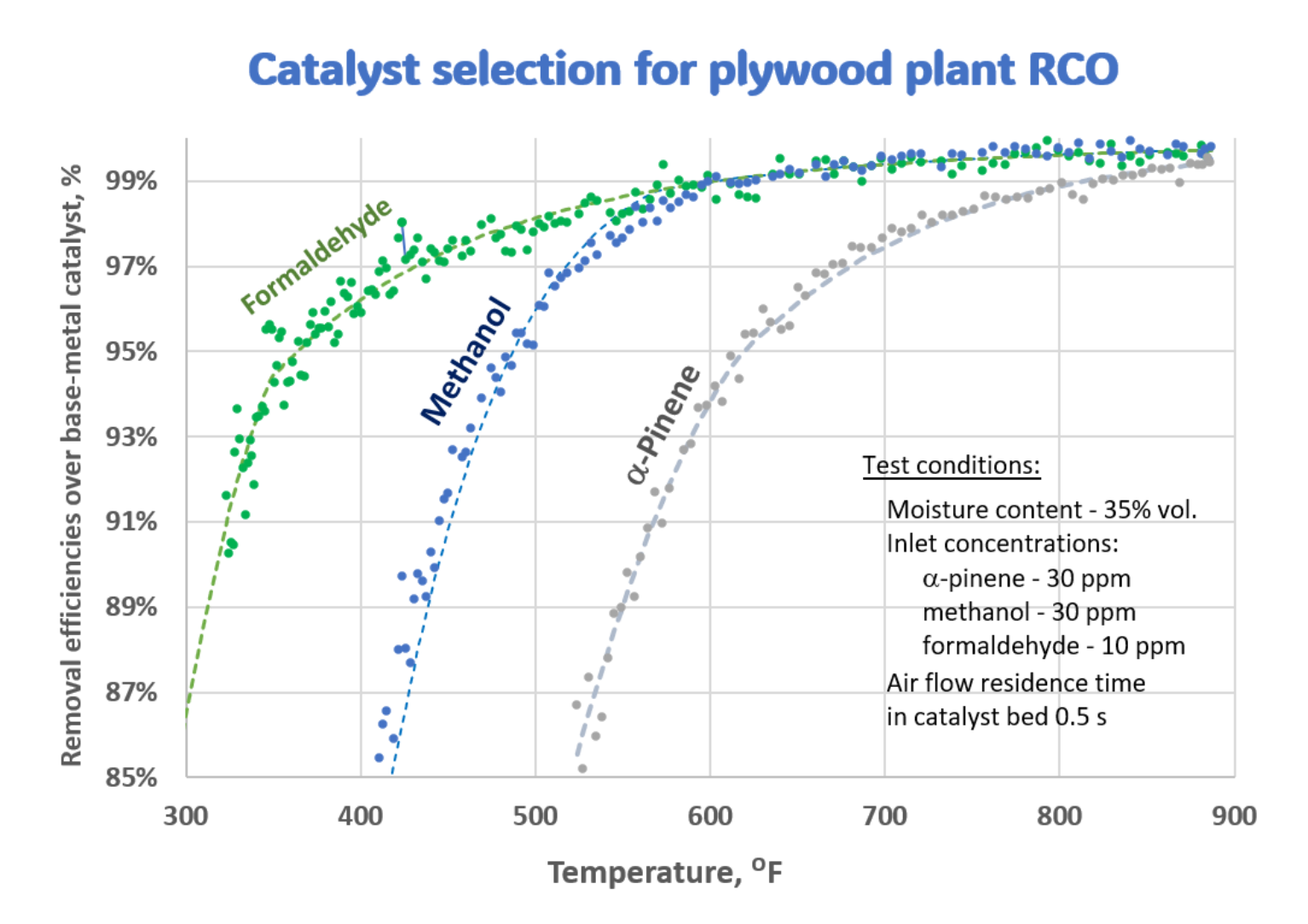
Our lab is equipped with two reactors for catalyst activity testing. The small-size stirred reactor primarily operates with model VOCs, enabling quick catalyst activity screening. The tubular reactor is used for testing relatively large catalyst loads with actual VOCs of interest. Two testing techniques provide versatility of our services. We test any catalyst, including bulk and structured, for any VOCs composition, including very low inlet concentrations and the destruction efficiency approaching 100%. The tests enable accurate prediction of oxidizer performance within the area of inlet parameters often overlapping the experiment.
Contamination Testing
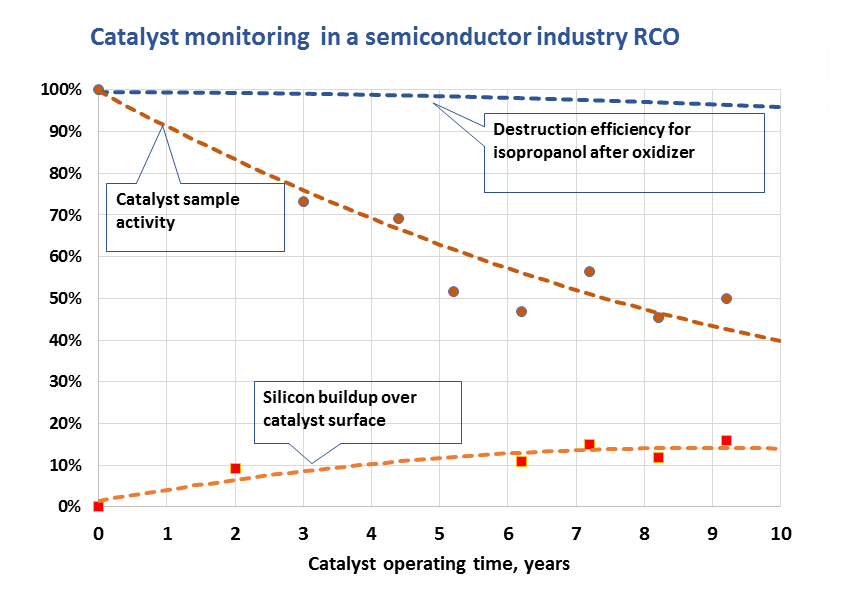
The selected method, Scanning Electron Microscopy / Energy Dispersive X-Ray Spectrometry (SEM-EDXS) identifies chemical elements over the surface layer, 1–2 microns deep. Furthermore, it provides for semi quantitative composition data, including catalyst contaminants such as silicon.
Catalyst Regeneration
The lab regeneration via washing or heat treatment determines the optimal procedure for restoring the activity of used catalyst. This effectively increases the catalyst service time.
Oxidizer Performance Evaluation
The oxidizer performance is found directly from tubular reactor tests and indirectly from stirred reactor tests. It incorporates basic information about the oxidizer including catalyst quantity, emission air flow rate, and operating temperature. Our clients’ projects and goals are our top priority. Every project comes with a 100% guarantee that the service will be efficient, timely and cost-effective.
EXAMPLES
REQUEST CATALYST TESTING
Contact our team to discuss your testing requirements and get a quote. We work with industrial plants, equipment manufacturers, and engineering firms worldwide.
CONTACT US